Why the Terminology Is Confusing
Hotel buyers frequently encounter the terms PBX, IP PBX, VoIP, cloud PBX, hosted phone system and IP phone. These terms describe different parts of the communication architecture, so using them interchangeably can make purchasing decisions harder.
PBX generally describes the system that manages internal extensions and calls. VoIP describes the transport of voice over an IP network. IP phones are endpoints that use network connectivity. Cloud PBX describes a hosted approach to call control. Understanding these distinctions creates a clearer starting point.
Traditional PBX
A traditional PBX is typically associated with on-site telephone equipment and physical telephone lines. It can provide extensions, transfers, voicemail and other business calling functions. Hotels that have used the same system for many years may have extensive legacy wiring and established procedures around it.
When evaluating an older PBX, consider its age, availability of replacement parts, support options, capacity, integration limitations and expansion process. A system can still be operational while becoming increasingly difficult to maintain.
- Cloud PBX
- VoIP
- IP phones
- Wireless DECT/WiFi phones
- Call routing
- Hosted administration
IP PBX
An IP PBX moves call control onto an IP network. It can work with IP phones and may support features such as extension management, call routing, conferencing, voicemail and mobile access. Some IP PBX systems remain on-site while others are hosted.
For hotels, IP PBX can be useful where the property wants greater local control but also wants to use network-based endpoints. The decision should include server requirements, administration, updates, backups and technical staffing.
VoIP
VoIP is the technology used to carry voice through IP networks. It can be delivered through an on-premise IP PBX, hosted PBX or cloud service. This distinction is important because saying that a hotel is moving to VoIP does not by itself specify where the PBX will run.
The hotel VoIP phone system page describes a cloud-based VoIP and PBX model with features including auto attendant, call history, call transfer, mobile applications and other communication functions. Hotels should evaluate the actual architecture behind a provider's VoIP offering.
Cloud PBX
Cloud PBX is a hosted call-management model. Instead of maintaining the entire PBX platform on hotel premises, the provider operates the core service in its infrastructure. The hotel still needs suitable internet connectivity and endpoints.
Cloud PBX can simplify centralized administration and make it easier to add users or manage multiple locations. However, the property should understand its internet dependency, backup options, vendor support and data-management responsibilities.
- Traditional PBX
- IP PBX
- Cloud PBX
- VoIP
- IP phones
- Wireless DECT/WiFi phones
IP Phones and Guest-Room Devices
The endpoint is the device used to place or receive calls. IP phones can be used at reception, offices and other work areas. Guest rooms may require simpler hospitality devices. The hotel IP phones page describes professional IP and VoIP phones designed for business communication and integration with cloud PBX systems.
Hotels should select endpoints based on usability and operational requirements rather than appearance alone. Button layout, audio quality, programmable keys, power, cleaning requirements and durability can all matter.
Wireless Communication
A fixed desk phone cannot solve every hospitality communication problem. Staff who move around the property need mobile communication options. The hotel WiFi phone system page describes cordless DECT communication with WiFi integration and features such as push-to-talk, messaging and handover.
Wireless coverage should be tested throughout guest floors, service corridors, basements, public areas and outdoor spaces where staff need communication. The network design should account for building materials, interference and device density.
- IP phones
- Wireless DECT/WiFi phones
- Call routing
- Hosted administration
- Traditional PBX
- IP PBX
Comparison Checklist
When comparing architectures, ask: Where is the PBX hosted? How are extensions provisioned? What endpoints are supported? What happens when internet connectivity fails? Who performs software updates? How are numbers ported? How are recordings stored? Can multiple properties be managed? What is included in support?
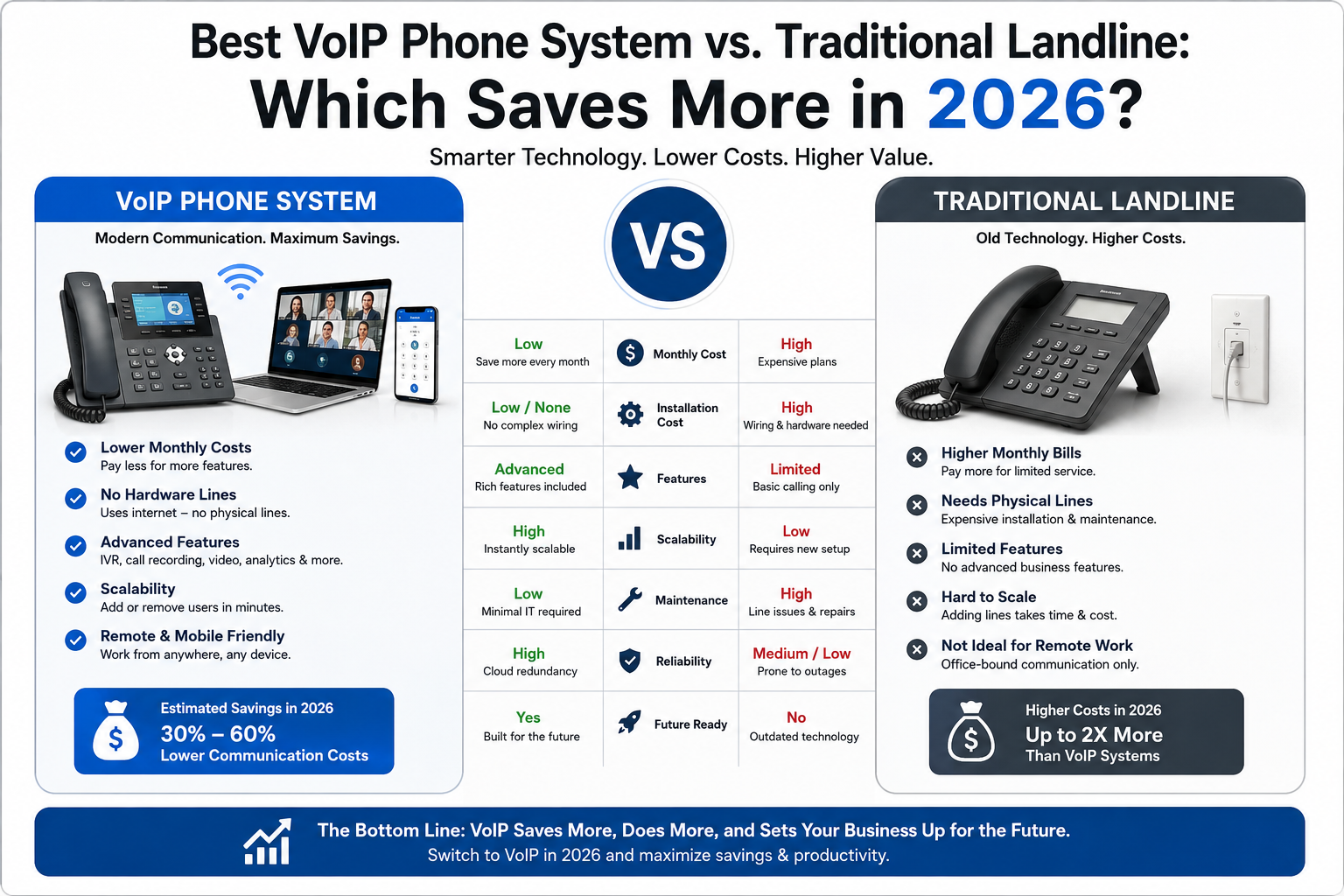
A comparison table can help stakeholders separate technical differences from marketing language. The most useful system is not determined by the name of the technology but by how well it satisfies the hotel's operational and infrastructure requirements.
Migration Planning
Replacing a hotel phone system is a project, not simply a hardware purchase. Begin by documenting every extension, number, department, analog device, elevator or emergency requirement and integration. Then determine which components can be retained and which must be replaced.
Pilot testing is valuable. Start with administrative phones or a controlled area, validate call quality and routing, train staff, and then expand. Guest-room cutovers should be scheduled carefully and tested room by room.
- Traditional PBX
- IP PBX
- Cloud PBX
- VoIP
- IP phones
- Wireless DECT/WiFi phones
Final Takeaway
PBX, VoIP and cloud PBX describe different aspects of a hotel communication architecture. IP phones and wireless endpoints provide the interfaces staff and guests use. Understanding how these pieces fit together makes it easier to evaluate providers and avoid mismatched equipment.
Review the hotel VoIP phone system, hotel IP phones and hotel WiFi phone system pages as starting points, then compare the architecture, endpoint strategy, network requirements and support model against the hotel's needs.
Practical Planning Tip 1
Hotels should also document the people responsible for administration, network support and vendor coordination. Clear ownership prevents small configuration issues from becoming operational delays. Before launch, staff should test internal calls, external calls, transfers, forwarding, voicemail, department routing and after-hours rules. Testing should include both normal and failure scenarios.
Practical Planning Tip 2
Before launch, staff should test internal calls, external calls, transfers, forwarding, voicemail, department routing and after-hours rules. Testing should include both normal and failure scenarios. A successful deployment should include documentation for room extensions, department numbers, administrator accounts, support contacts and emergency procedures. Documentation is especially valuable when hotel staff or vendors change.
Practical Planning Tip 3
Property managers should keep an updated communication diagram showing the PBX, internet connections, switches, access points, endpoints and backup paths. This becomes useful for troubleshooting and future expansion. During procurement, ask for a demonstration using hotel-specific examples rather than a generic office scenario. A front-desk transfer, guest-room call, housekeeping request and maintenance escalation reveal more than a feature checklist.
Practical Planning Tip 4
A successful deployment should include documentation for room extensions, department numbers, administrator accounts, support contacts and emergency procedures. Documentation is especially valuable when hotel staff or vendors change. Technology should be reviewed periodically after deployment. Guest expectations, staffing patterns, property renovations and software integrations can change, so the phone system should be reassessed as the hotel evolves.
Frequently Asked Questions
What is a PBX in a hotel?
The answer depends on the hotel's room count, network design, staffing model and communication requirements. The property should document the workflow first and then confirm the feature, compatibility and support details with the selected provider.
Is every VoIP system a cloud PBX?
The answer depends on the hotel's room count, network design, staffing model and communication requirements. The property should document the workflow first and then confirm the feature, compatibility and support details with the selected provider.
What is the difference between IP PBX and cloud PBX?
The answer depends on the hotel's room count, network design, staffing model and communication requirements. The property should document the workflow first and then confirm the feature, compatibility and support details with the selected provider.
Can a hotel migrate from analog phones to VoIP?
The answer depends on the hotel's room count, network design, staffing model and communication requirements. The property should document the workflow first and then confirm the feature, compatibility and support details with the selected provider.
Which system is easier to scale?
The answer depends on the hotel's room count, network design, staffing model and communication requirements. The property should document the workflow first and then confirm the feature, compatibility and support details with the selected provider.
Can PBX systems support guest-room extensions?
The answer depends on the hotel's room count, network design, staffing model and communication requirements. The property should document the workflow first and then confirm the feature, compatibility and support details with the selected provider.
Does cloud PBX work with IP phones?
The answer depends on the hotel's room count, network design, staffing model and communication requirements. The property should document the workflow first and then confirm the feature, compatibility and support details with the selected provider.
What should be checked before replacing a hotel PBX?
The answer depends on the hotel's room count, network design, staffing model and communication requirements. The property should document the workflow first and then confirm the feature, compatibility and support details with the selected provider.
Can existing hotel numbers be ported to VoIP?
The answer depends on the hotel's room count, network design, staffing model and communication requirements. The property should document the workflow first and then confirm the feature, compatibility and support details with the selected provider.
What is the role of the hotel network?
The answer depends on the hotel's room count, network design, staffing model and communication requirements. The property should document the workflow first and then confirm the feature, compatibility and support details with the selected provider.